
Black maca: why the rare root from Junín stands out
3 min read
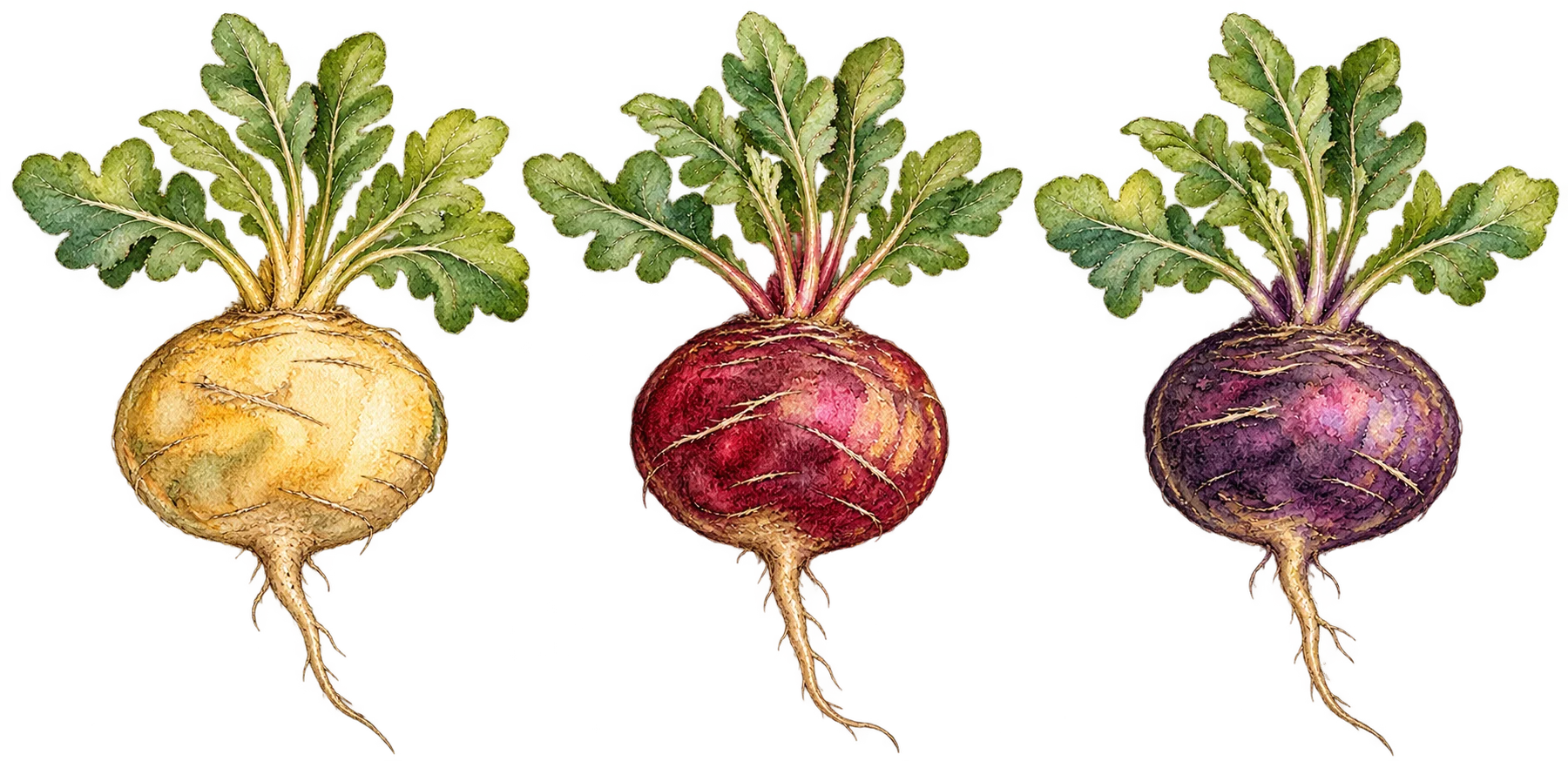
Maca grows on the high plateau around Junín in Peru, at elevations above 4,000 metres. A harvest does not yield just one colour. Yellow, red, purple and black roots are all part of this Andean plant’s diversity. The black variety stands out because it is comparatively rare.

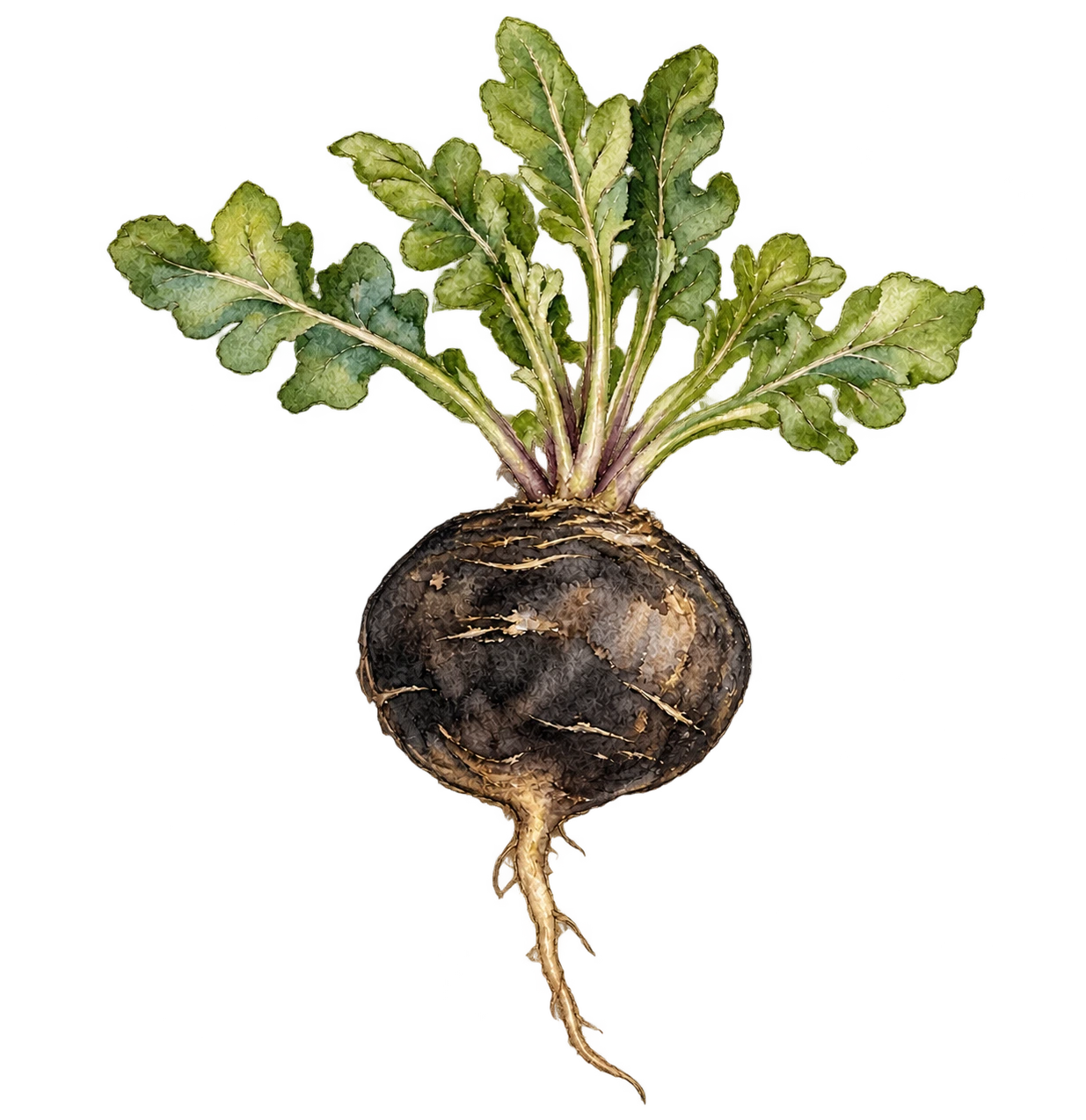

Maca is no recent trend in Junín. A historical overview by the International Potato Center refers to a report from 1572: people in the Chinchaycocha region already traded maca at that time. Peru’s agricultural research institute INIA describes how the roots are distinguished by colour and dried after harvest.
Why black maca is special
A 1992 survey examined 758 maca samples from the Junín region. About 4% were black, compared with about 48% yellow. These figures are reported in a scientific paper published in 2016. The proportions can vary between harvests, but a powder made exclusively from black maca requires the rarer roots to be selected separately.
That selection is the idea behind bunaroba Black Maca. Maca Mix embraces the range of colours found in Junín and combines yellow, red, black and purple maca. One focuses on the uncommon black variety; the other brings four varieties together. Both come from Junín de Pasco, are certified organic and contain maca without additional ingredients.
From the plateau to your kitchen
The first taste needs no elaborate recipe. A teaspoon stirred into oats with yoghurt and grated apple lets you get to know the powder’s own flavour. For a creamier result, blend it with banana and milk or a plant drink. For a warm cacao drink, first stir the powder smooth with a little liquid, then add the rest.
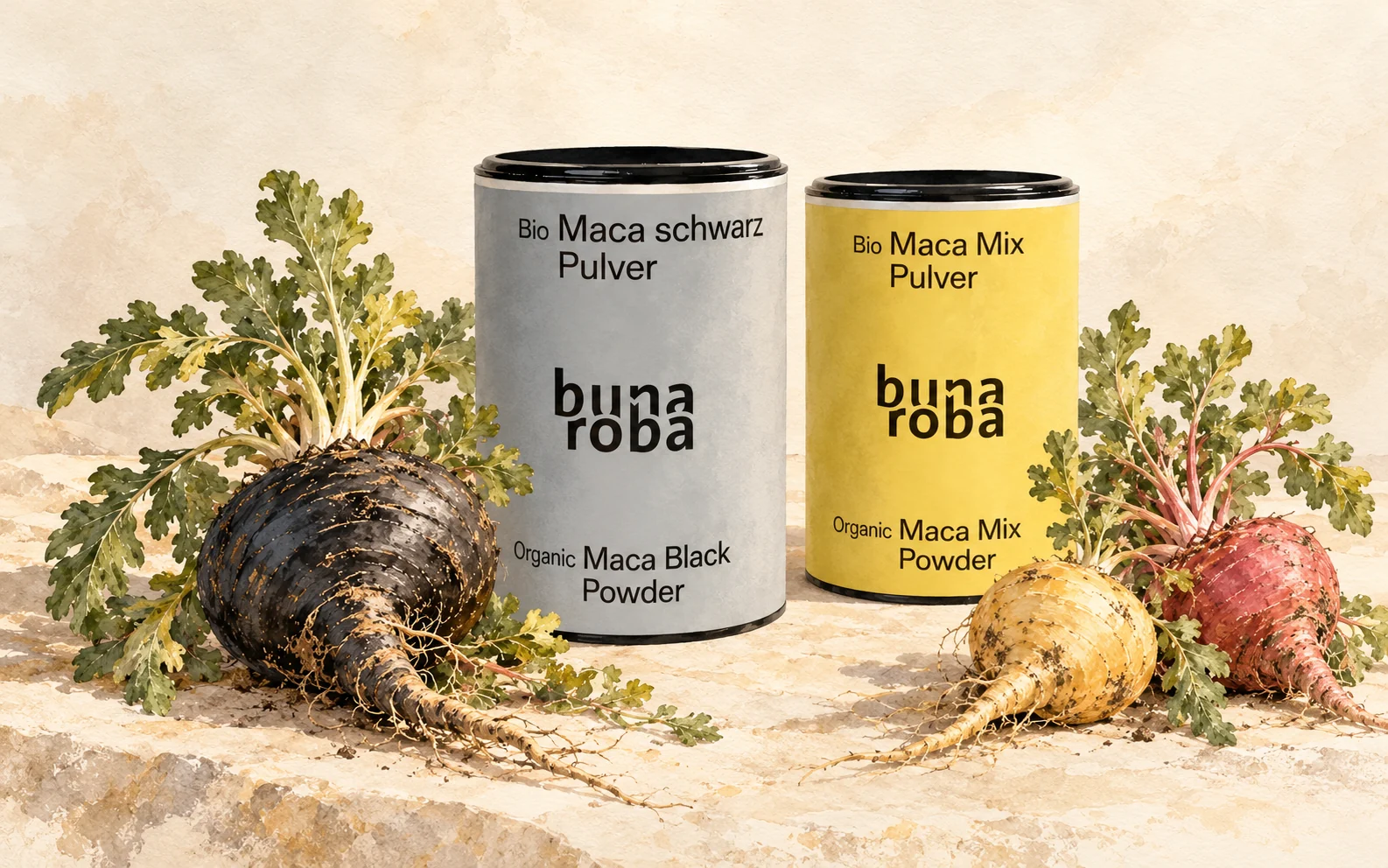
Both bunaroba packs specify 5 g, roughly one teaspoon, as the daily amount. If you want to compare Black Maca and Maca Mix, use the same basic recipe for both. That way, the other ingredients will not dominate the comparison.
Black maca represents a deliberate choice of a less common variety of a plant that has been cultivated and used in Junín for centuries.
Related articles
-
From cacao nib to drink: what shapes cacao flavour
Cacao from the Dominican Republic, roasted nibs, no alkalisation and two simple ways to prepare the powder.
-
Barley grass, wheatgrass, spirulina or chlorella: which powder suits you?
Compare four green powders by ingredient, origin, serving size and nutrition, with simple ideas for a first taste.
-
Problematic Additives in Dietary Supplements
Sweeteners, emulsifiers and colourants in dietary supplements: what authorities and studies say about them.
Disclaimer
The information on this page is provided for general informational and educational purposes only. It does not constitute medical advice, diagnosis or treatment recommendations and is not a substitute for professional medical consultation. Dietary supplements are not a substitute for a balanced and varied diet and a healthy lifestyle. If you have health concerns, pre-existing conditions, are pregnant, breastfeeding or taking medication, please consult a physician before use. Bunaroba AG assumes no liability for decisions made based on this content. Despite careful research, errors cannot be excluded.
Editorial responsibility for this article: Roger Giese. How we use AI tools is set out under Use of AI.