
From cacao nib to drink: what shapes cacao flavour
2 min read
A spoonful of cacao powder looks simple. Behind it are several choices: where the beans come from, how they are processed and whether the cacao is alkalised after roasting. These steps shape colour and flavour more clearly than a word such as “raw” on the front of a tub.
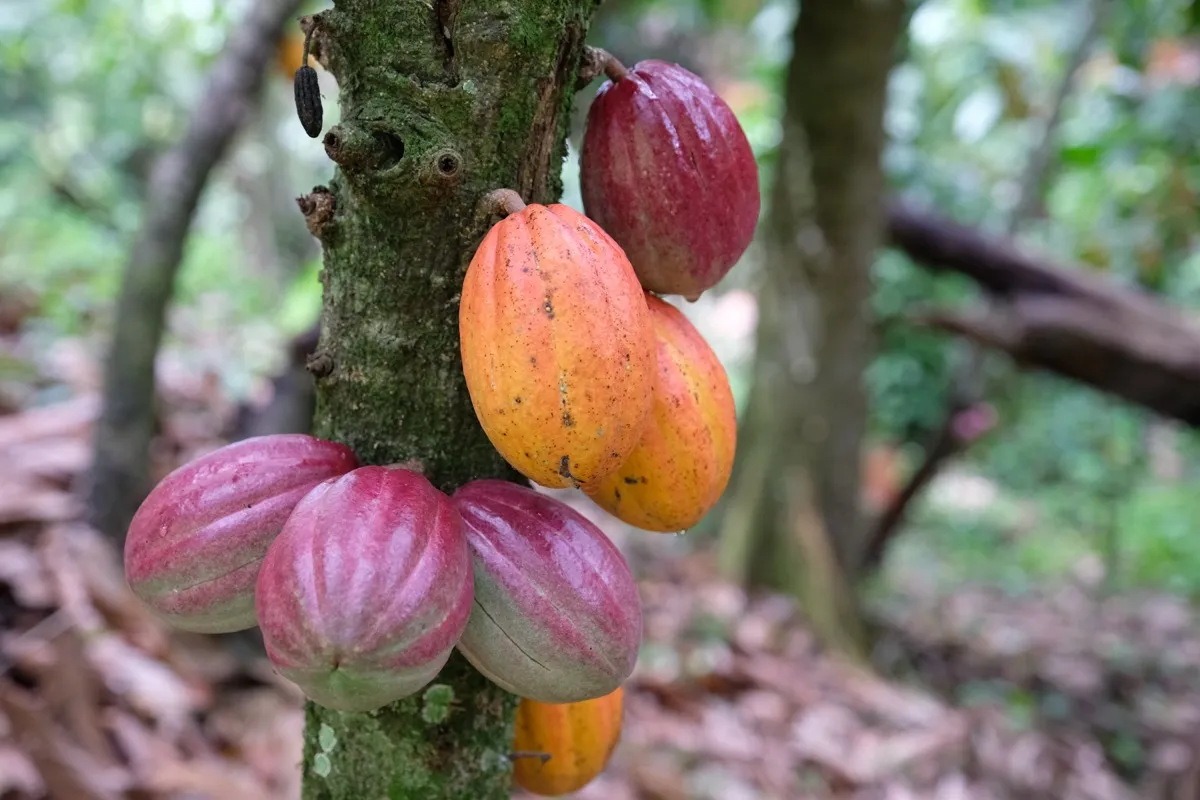
Origin and roasting
The beans for bunaroba Organic Cacao come from the Dominican Republic. The cacao is processed further and packed in Switzerland. During production, the cacao nibs are roasted. Roasting develops the full cacao aroma, so this is not a raw-food product.
The International Cocoa Organization describes how fermentation and drying already lay the foundations for aroma and colour before roasting. Origin and processing belong together. Even powder from the same beans can look and taste different depending on the later steps.
What “not alkalised” actually means
After roasting, cacao can also be treated with alkaline substances. This changes, among other things, the powder’s acidity and colour. A study of different alkalisation conditions shows that temperature, treatment time and the amount of alkali affect the result.
bunaroba skips this step for its cacao powder. According to the ingredient list, the tub contains 100% cacao powder, without acidity regulators. “Roasted” and “not alkalised” are therefore compatible: one describes flavour development through heat, the other the absence of a subsequent treatment.
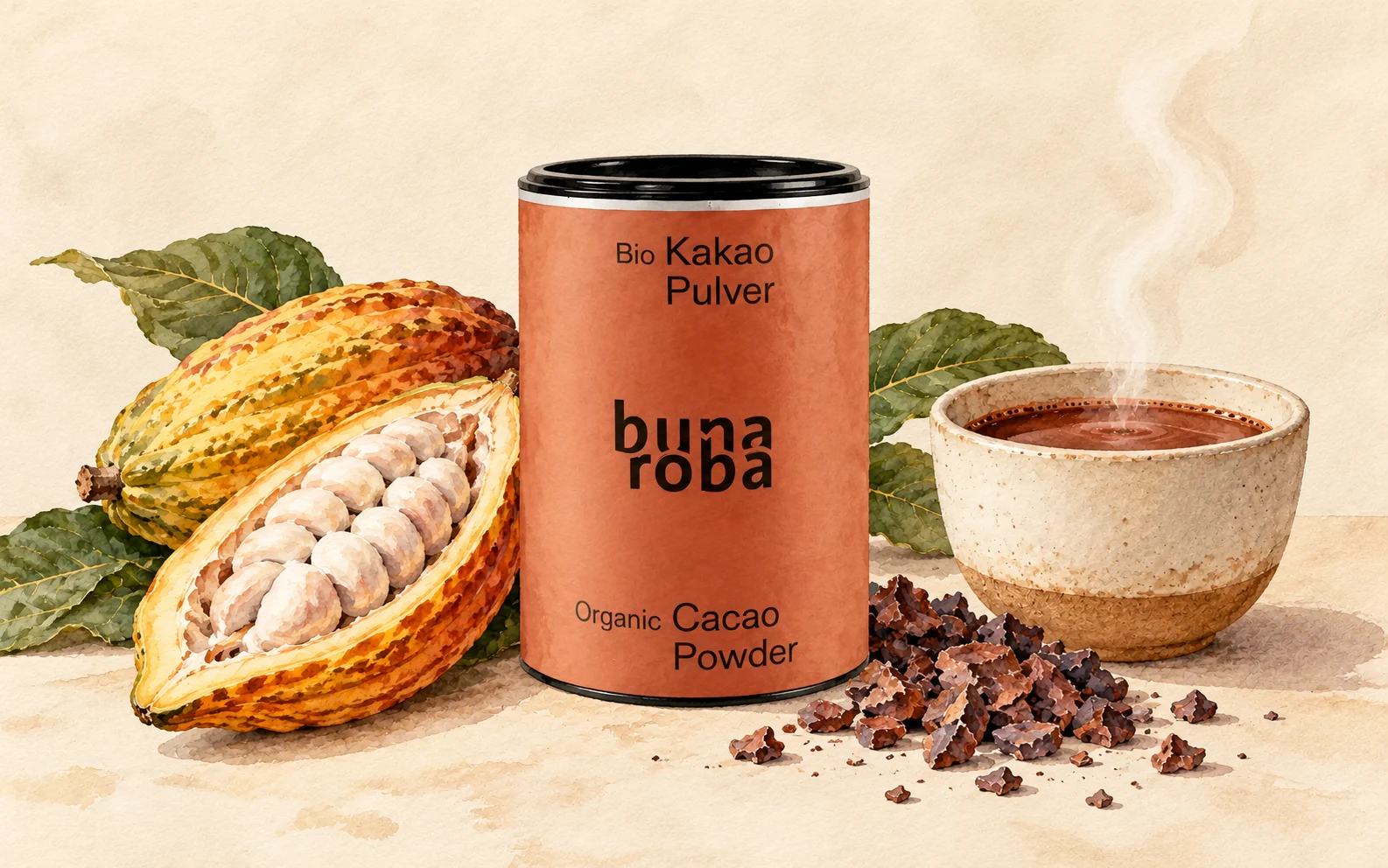
How to use the powder
For a warm cup: Stir one or two teaspoons of cacao smooth with a little hot water or warm milk. Only then add the rest of the liquid. This helps avoid dry lumps. Sweeten to taste.
For baking: Check whether a recipe specifically calls for alkalised cacao powder. A non-alkalised powder can give a different colour and flavour. With a new recipe, a small trial batch helps before you bake a large quantity.
With bunaroba Cacao, you get a roasted, non-alkalised powder made from one ingredient. From there, the liquid, sweetness and recipe determine what you make of it.
Related articles
-
Black maca: why the rare root from Junín stands out
Discover maca’s history in Junín, why black roots are uncommon, how they differ from maca mix and how to use both in the kitchen.
-
Barley grass, wheatgrass, spirulina or chlorella: which powder suits you?
Compare four green powders by ingredient, origin, serving size and nutrition, with simple ideas for a first taste.
-
Problematic Additives in Dietary Supplements
Sweeteners, emulsifiers and colourants in dietary supplements: what authorities and studies say about them.
Disclaimer
The information on this page is provided for general informational and educational purposes only. It does not constitute medical advice, diagnosis or treatment recommendations and is not a substitute for professional medical consultation. Dietary supplements are not a substitute for a balanced and varied diet and a healthy lifestyle. If you have health concerns, pre-existing conditions, are pregnant, breastfeeding or taking medication, please consult a physician before use. Bunaroba AG assumes no liability for decisions made based on this content. Despite careful research, errors cannot be excluded.
Editorial responsibility for this article: Roger Giese. How we use AI tools is set out under Use of AI.