
How to read an ingredient list: two protein powders as an example
3 min read
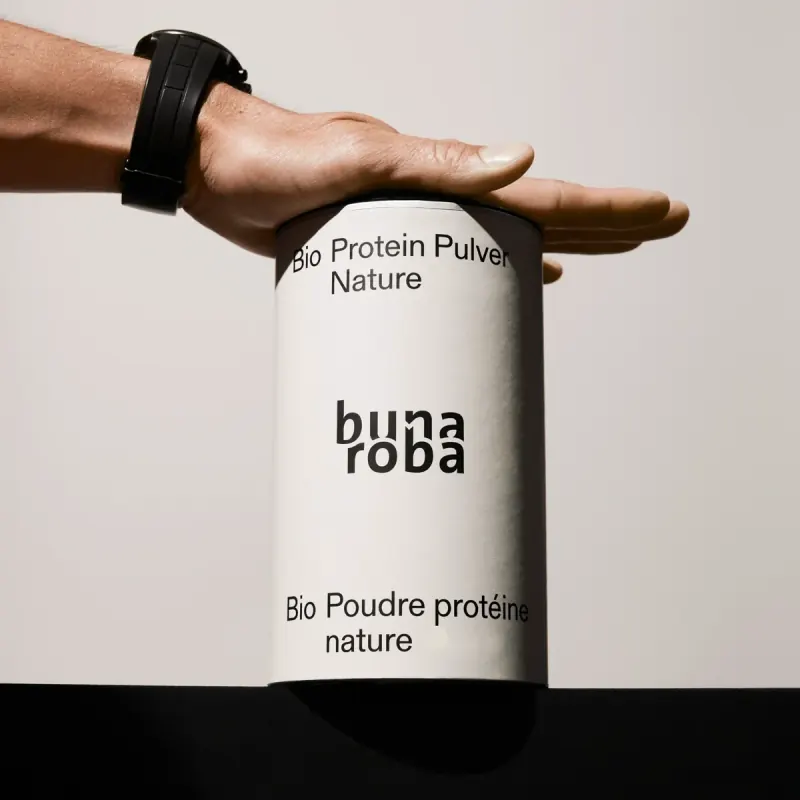
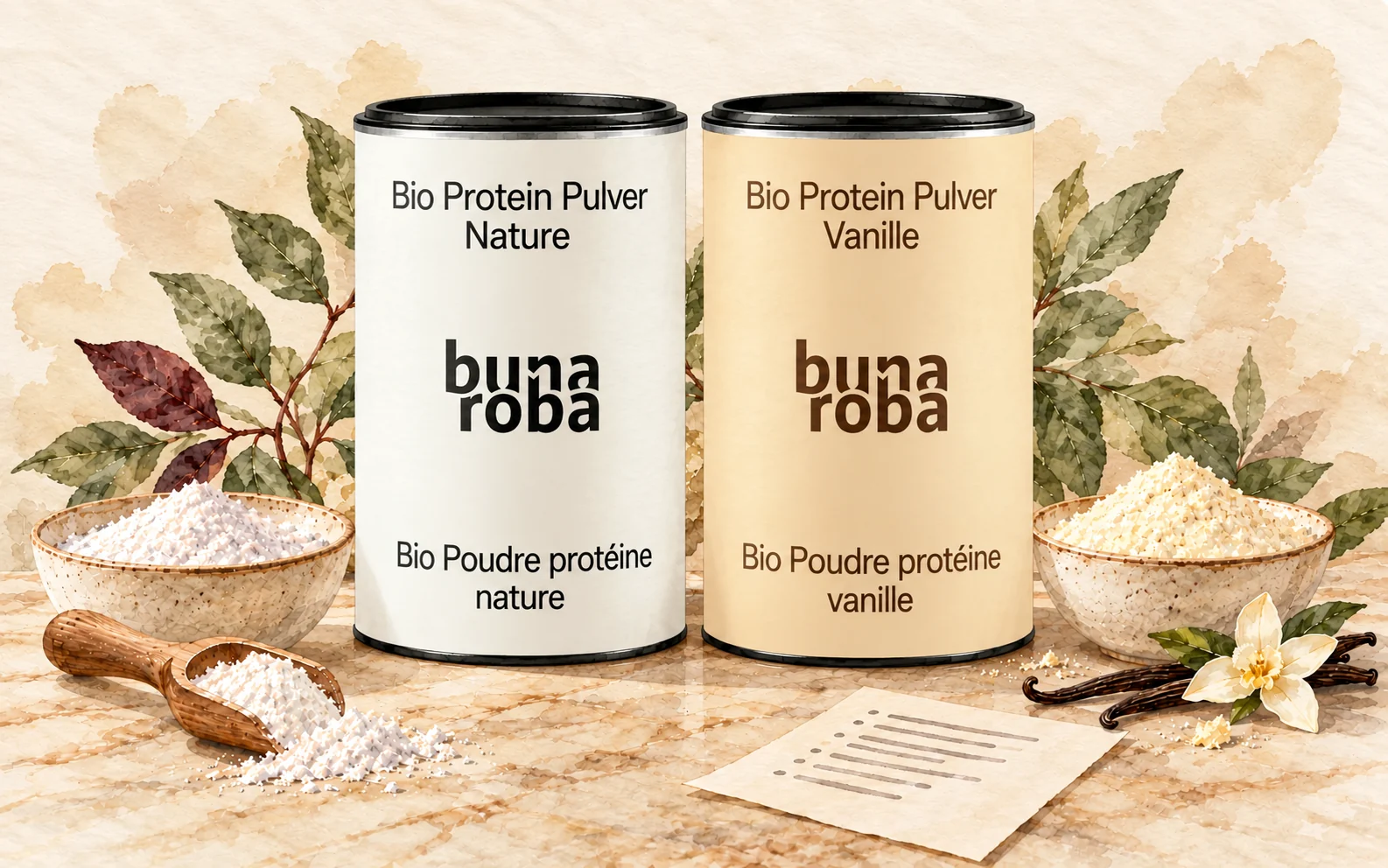
Two tubs in the same product family can differ more than their front labels suggest. With bunaroba Protein Nature and Protein Vanilla, a look at the back reveals which ingredients shape the flavour and what each serving provides.
Ingredients first, then the numbers
An ingredient list generally shows components in descending order of their weight at the time of manufacture. Pea protein and hemp protein come first in both powders. Nature also contains agave inulin and maca. Vanilla additionally contains lucuma and natural vanilla flavouring. If you prefer a short list without flavouring, the difference is easy to spot.
The order does not tell you how many grams of protein a serving contains. For that, use the nutrition table. Per 30 g serving, the declared values are:
| Protein Nature | Protein Vanilla | |
|---|---|---|
| Protein | 16 g | 15 g |
| Fibre | 3.6 g | 3.6 g |
| Sugars | 1.1 g | 1.5 g |
These figures are for one serving, not the whole tub. When comparing other brands, use the same basis: 100 g with 100 g, or 30 g with 30 g. One manufacturer’s “serving” can be a different size from another’s.
Three common stumbling blocks
Ingredient order is not a recipe in percentages. It shows which ingredients weigh more, but not the exact amount of every component. Separate quantity declarations are required for certain highlighted ingredients.
“No added sugar” does not mean “sugar-free”. A food can contain naturally occurring sugars. In Switzerland, the two phrases have different legal conditions. Read the “of which sugars” line in the nutrition table together with the ingredient list.
One serving is not always one spoonful. Powders fill a spoon differently. A kitchen scale is more reliable than an estimated teaspoon when you want to compare amounts.
Check a new product in one minute
Read the first three ingredients. Look for ingredients you want to avoid and check the allergens. Then compare the nutrition values per 100 g and calculate them for the amount you actually use. For a product you buy often, that quick check is more useful than a slogan on the front.
Source for labelling and ingredient order: Swiss Federal Food Safety and Veterinary Office: food labels.
Related articles
-
Black maca: why the rare root from Junín stands out
Discover maca’s history in Junín, why black roots are uncommon, how they differ from maca mix and how to use both in the kitchen.
-
From cacao nib to drink: what shapes cacao flavour
Cacao from the Dominican Republic, roasted nibs, no alkalisation and two simple ways to prepare the powder.
-
Barley grass, wheatgrass, spirulina or chlorella: which powder suits you?
Compare four green powders by ingredient, origin, serving size and nutrition, with simple ideas for a first taste.
Disclaimer
The information on this page is provided for general informational and educational purposes only. It does not constitute medical advice, diagnosis or treatment recommendations and is not a substitute for professional medical consultation. Dietary supplements are not a substitute for a balanced and varied diet and a healthy lifestyle. If you have health concerns, pre-existing conditions, are pregnant, breastfeeding or taking medication, please consult a physician before use. Bunaroba AG assumes no liability for decisions made based on this content. Despite careful research, errors cannot be excluded.
Editorial responsibility for this article: Roger Giese. How we use AI tools is set out under Use of AI.